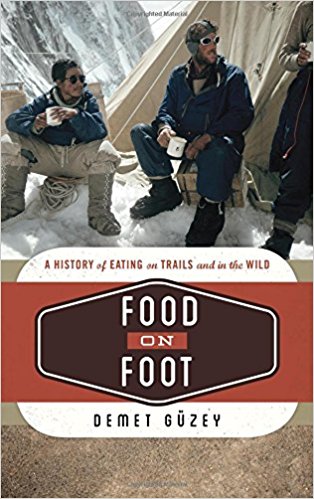
I received an advanced copy of Food on Foot: A History of Eating on Trails and in the Wild for review. This post contains affiliate links.
Food on Foot: A History of Eating on Trails and in the Wild
Guess what we’ve been doing the last few days of Spring Break? If you guessed we were watching food shows you must know us really well. We get absorbed in food - the flavors, the preparation, and the fascination with foods from around the world. I had the chance to read Food on Foot: A History of Eating on Trails and in the Wild, by Demet Güzey. My pile of food books is piling up and I thought it was such a great idea for Demet to share this aspect of food that really never gets discussed. What DID people eat on those long treks exploring our country?
We all have special connections to food. We remember favorite cereals from when we were kids and chances are, there is still something that our mom (or dad) made that we can’t get enough of. Food plays such an important role in our day-to-day that it makes sense that it would be just as critical, even more so, for those living outdoors. Where do they get their food? Fish? Hunt? Do they bring it with them?
Demet Güzey, PhD., is a writer and lecturer on food and culture and it’s no surprise after reading her book that she is also an avid mountain hiker. But this book doesn’t just cover one aspect of eating outdoors, it covers the entire genre. Demet opens with a discussion on picnics and how they came about. She moves on to explorers, mountain expeditions, desert travel, and even army rations. I bet you never thought about food in this way. Hey, we all need to eat, right?
Some incredible facts you’ll read about in the book are:
- trip-de-roche (a type of fungus found in the arctic) kept some of the Polar exlorers alive.
- In the late 1700’s it was thought that lemons and limes might prevent scurvy but this wasn’t actually proven until the 1930’s.
- The Bedu people of Arabia ate primarily bread and porridge. For every single meal. They were the most hospitable people and offered guests their food before they would eat themselves.
- The military was the catalyst for some of our current food processes. American Gail Borden created the process of evaporation and canning milk. Freeze drying was developed during WWII.
The book is well-researched and reads like a combination of textbook and storybook. The tales of explorers and hikers are entertaining and you will learn quite a bit about different parts of the world and cultures. It will expand your food knowledge for sure.
If you are as interested in food as I am, you’ll want to pick up a copy of Food on Foot: A History of Eating on Trails and in the Wild. Such a great gift for foodies and adventurers.





Leave a Reply